What Boston Education Museums Should Check Before Choosing a Coin-Making Experience
For a Boston education museum, a souvenir machine is not just another retail fixture. Visitors judge it as part of the learning journey: Is it easy to understand, connected to the exhibition, and worth carrying home? Before purchasing a Museum Souvenir Coin Machine, museum teams should evaluate the experience from the viewpoint of families, school groups, tourists, and members. The right equipment turns a brief transaction into a memorable final chapter of the visit.
Start with the visitor’s decision moment
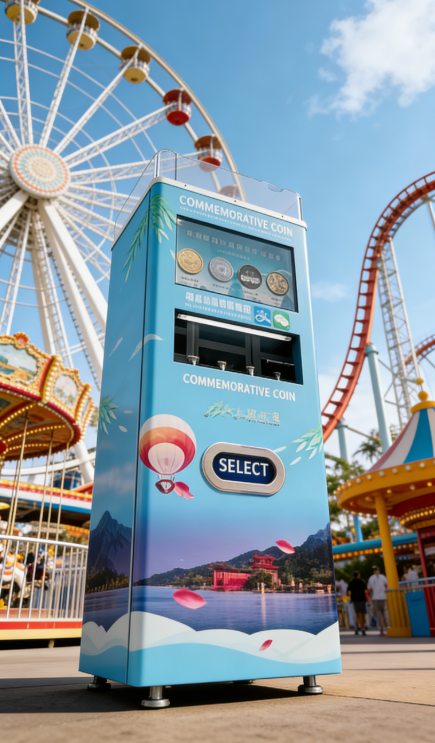
Most guests decide within seconds whether to use a machine. Clear graphics, visible sample coins, simple pricing, and an obvious start button reduce hesitation. A Museum Coin Vending Machine should communicate what the visitor will receive before payment. Parents want to know the cost, children want to see the design choices, and teachers need the process to move quickly. Crowded instructions or an unfamiliar interface can discourage purchases.
Placement matters as much as appearance. Near an exhibition exit, learning lab, or gift shop entrance, the machine can connect reflection with action. A visitor who has just explored maritime history, natural science, or local innovation is more likely to purchase a coin when its artwork relates to that subject. In this setting, a Visitor Souvenir Coin Machine becomes a storytelling endpoint rather than an isolated vending unit.
Use customization to extend the lesson
Boston museum audiences often expect authenticity. Generic imagery may create occasional sales, but custom designs reinforce the institution’s mission. A Custom Coin Making Machine should support artwork based on a signature object, landmark, historical figure, scientific idea, or seasonal program. Buyers should ask how easily designs can be updated, how many choices can be offered, and whether limited editions can be created for exhibitions, anniversaries, donor events, or school partnerships.
Customization also encourages collecting. When visitors can choose among several designs, they are more likely to return, compare coins, or look for the next release. A new series can bring members back to a familiar gallery. Used this way, a Museum Souvenir Coin Machine contributes to long-term engagement rather than only one-day revenue. A flexible Custom Coin Making Machine also gives the museum room to test themes before committing to a larger merchandise program.
Examine speed, reliability, and group flow
Education museums often receive concentrated traffic from field trips, weekend families, and summer tourists. A slow process can create a line that blocks circulation. An Automated Coin Vending Machine should complete each transaction consistently, provide clear status signals, and recover smoothly from routine user errors. Ask about production time, payment options, coin capacity, refill steps, error alerts, and the daily checks required from staff.
Maintenance should be realistic for frontline teams. Refilling materials, cleaning touch surfaces, checking alignment, and reading basic fault messages should not demand specialist knowledge. A dependable Museum Coin Vending Machine protects visitor satisfaction and staff time, especially where retail employees already handle admissions, memberships, and store operations. Buyers should also confirm warranty coverage, spare-part availability, remote support, and expected response times.
Check accessibility and family usability
Public-facing equipment should work for different ages, heights, and abilities. Screen contrast, readable type, intuitive icons, reachable controls, and enough space around the unit all affect adoption. A Visitor Souvenir Coin Machine should remain understandable when the gallery is crowded or noisy. Multilingual prompts can be valuable in a city serving international travelers and diverse local communities.
For children, seeing a blank become a finished keepsake is part of the attraction. Adults care more about payment confidence and product quality. A successful Automated Coin Vending Machine balances both needs: it makes the process exciting without making it confusing. Sample displays should show finished size, edge quality, and design detail. The museum should also observe whether one adult can comfortably guide several children through the purchase.
Measure more than direct sales
Revenue matters, but museums should also consider dwell time, satisfaction, social sharing, and educational reinforcement. A coin can prompt a child to explain an exhibit later or encourage a family to remember the museum’s name. A well-positioned Museum Coin Vending Machine can support sponsored designs, while a thoughtfully programmed Visitor Souvenir Coin Machine can link releases to school curricula or community events.
Before ordering, decision-makers should verify artwork ownership, update pricing, payment processing, installation needs, and reporting options. They should test the complete visitor journey rather than judging the cabinet alone. A carefully selected Museum Souvenir Coin Machine, supported by a reliable Automated Coin Vending Machine workflow and a versatile Custom Coin Making Machine program, can transform a museum visit into a collectible experience that continues after guests leave.
#MuseumSouvenirCoinMachine #MuseumCoinVendingMachine #VisitorSouvenirCoinMachine #AutomatedCoinVendingMachine #CustomCoinMakingMachine #EducationalMuseums #ScienceCenters #ChildrensMuseums #SchoolGroups #CulturalAttractions
READ MORE: