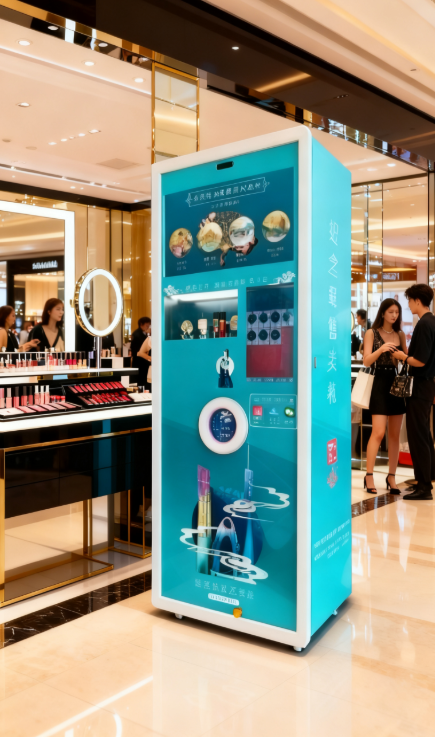
Can a Self-Service Souvenir Station Turn Free Museum Footfall into Reliable Revenue?
London museums can welcome huge numbers of free-entry visitors while still struggling to convert attendance into retail spending. Many guests avoid crowded shops or bulky products. The opportunity is to offer a compact purchase at the moment the visit feels most memorable, creating revenue without making the experience feel intrusive.
Match the machine to the visitor’s decision
A well-positioned Museum Souvenir Coin Machine should appear near a signature gallery exit, landmark object, family area, or main route to the lobby. The product is easy to understand, easy to carry, and suitable for tourists, families, school groups, collectors, and repeat visitors. Buyers should look for a design that makes the purchase feel like the final part of the visit rather than an unrelated vending transaction.
A Souvenir Coin Vending Machine can capture customers who skip the gift shop, arrive during peak hours, or have only a few minutes before leaving. The interface should be simple, multilingual, and contactless. Clear pricing, visible samples, and a short animation showing the process can reduce hesitation. In London, fast card and mobile-wallet payments are especially important for domestic and international audiences.
Assess return per square metre
The purchase price is only one part of the decision. A Coin Minting Machine uses limited floor space and can operate throughout opening hours with little labour. Procurement teams should calculate transactions per thousand visitors, expected selling price, consumable cost, payment fees, servicing, revenue share, and estimated payback. This produces a more useful comparison than simply choosing the cheapest cabinet.
A Medallion Press Machine becomes more valuable when it supports several artworks, seasonal issues, temporary exhibitions, and limited editions. Design rotation can encourage repeat purchases and give members or local families a reason to return. Buyers should ask how quickly tooling and artwork can be changed, whether small production runs are possible, and whether the supplier can support future collections without lengthy delays.
Protect the visitor experience
The visitor souvenir coin machine should communicate quality before payment. Finished samples, crisp embossing, smooth edges, attractive packaging, and consistent metal blanks make a low-cost purchase feel worth keeping. Accessibility also matters. The screen, payment point, collection tray, and instructions should work for children, wheelchair users, older visitors, and people who do not speak English confidently.
Reliability is central to conversion. A second Museum Souvenir Coin Machine is not automatically better than one unit with strong uptime, adequate blank capacity, remote alerts, and quick staff access. Buyers should test refilling, jam recovery, cleaning, cycle time, noise, and weekend support. Failure during a holiday or major exhibition removes income from the busiest period.
Make the equipment part of the museum brand
A branded Souvenir Coin Vending Machine should visually belong to the institution. Cabinet graphics, lighting, interface language, and coin artwork can reference the building, collection, exhibition, or local story. When visitors can watch the forming process, the equipment becomes a small attraction rather than a static vending point. That sense of participation increases emotional value because the customer sees the souvenir being created.
For groups operating several venues, a Coin Minting Machine should also be flexible enough for museums, heritage attractions, science centres, zoos, aquariums, theme parks, and other leisure destinations. A capable supplier should adapt artwork, cabinet dimensions, payments, and reporting while keeping maintenance consistent across locations.
The mechanical theatre of a Medallion Press Machine can attract attention, but the buyer should still test throughput, sound, safety shielding, and the time required for each transaction. A queue can be useful social proof, but a slow or confusing process can block circulation. Placement should therefore balance visibility with sufficient standing space and a clear route for other visitors.
Use a measured pilot before wider rollout
A pilot should begin with one high-traffic location, a focused design set, and defined measures such as sales per visitor, uptime, refill frequency, payment success, and customer feedback. A second visitor souvenir coin machine should be added only after the museum understands the strongest placement and price. Data from the first installation can then guide expansion to temporary exhibitions, family zones, satellite sites, or partner attractions.
The final decision should balance visitor appeal, operational simplicity, brand fit, and measurable return. A third Museum Souvenir Coin Machine should represent a repeatable income channel, not merely a novelty. The final evaluation of a Souvenir Coin Vending Machine, a Coin Minting Machine, a Medallion Press Machine, and a visitor souvenir coin machine should focus on dependable uptime, enjoyable interaction, scalable design changes, and the ability to convert free-entry footfall into voluntary spending.
#LondonMuseums #VisitorAttractions #HeritageSites #ThemeParks #Zoos #Aquariums #ScienceCentres #AmusementEquipment
READ MORE: